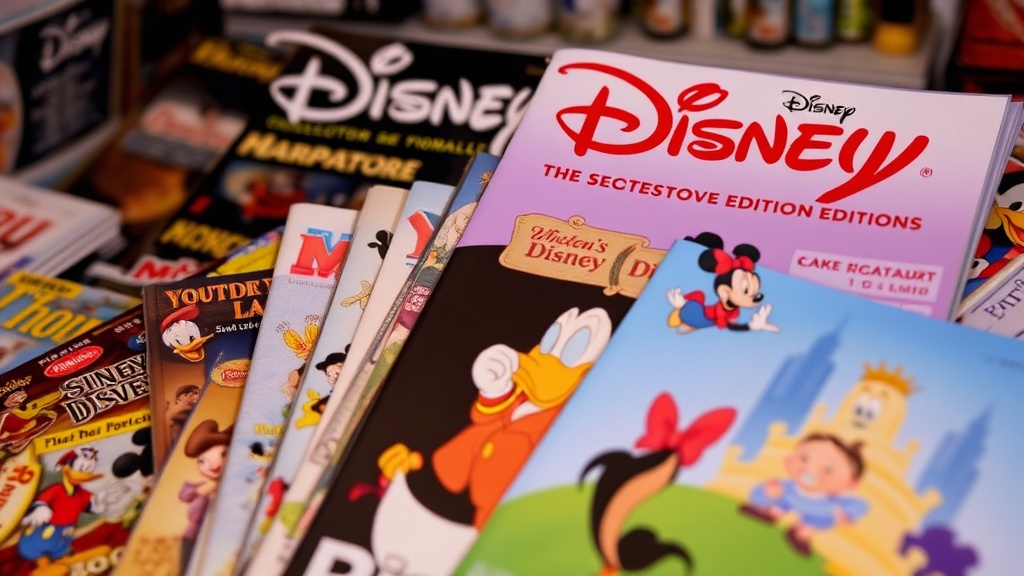
Preserving Disney Collector's Edition Magazines: Storage and Display Strategies That Actually Work

What You'll Learn About Protecting Your Disney Magazine Collection
This guide covers everything you need to know about storing and displaying Disney collector's edition magazines — from the rare D23 issues to vintage publications and special anniversary editions. You'll learn which materials actually protect paper over time, how to avoid the storage mistakes that destroy value, and display methods that keep your collection accessible without risking damage. Whether you've got twenty issues or two hundred, these practical steps will help your magazines stay in the condition you bought them in.
Why Do Disney Collector's Magazines Need Special Storage?
Disney collector's edition magazines aren't like the paperbacks you toss in a box. These publications — think D23 Gold Member issues, limited anniversary editions, and vintage Disney publications from the 1960s through the 1990s — often feature thicker paper stock, glossy covers, special inserts, and sometimes even tipped-in art or gatefold spreads. That premium construction makes them beautiful. It also makes them vulnerable.
Standard storage methods — rubber-banding stacks together, tossing them in cardboard boxes, or leaving them in direct sunlight — actively destroy value. Acidic cardboard leaches into paper edges within months. Rubber bands degrade and stick to covers. UV light fades vibrant Disney artwork faster than you'd expect. And humidity? It turns glossy pages into wavy, stuck-together disasters.
The collectors who maintain five-figure Disney magazine collections all follow similar principles. They prioritize acid-free materials, stable environments, and minimal handling. But here's the part most guides skip — you don't need a museum budget to apply these principles. A few smart material choices and some attention to environmental factors will protect your collection just as effectively as professional archival storage.
What Materials Actually Protect Magazine Paper Long-Term?
Let's talk specifics. The paper and cardboard found in most homes is surprisingly acidic. Wood pulp paper has a natural pH that breaks down over time — that's why old newspapers turn yellow and brittle. Your Disney magazines are printed on better stock, but they're still vulnerable to acid migration from whatever touches them.
Start with acid-free, lignin-free magazine boxes. These are sometimes called "archival storage boxes" or "document preservation boxes." Look for pH-neutral materials (pH 7.0-8.5 is ideal). Companies like Archival Methods and B&H Photo's archival section offer boxes specifically sized for magazine storage. The standard sizes — typically 9x11.5x3 inches or 10x12x4 inches — accommodate most Disney collector's editions without cramming or bending.
Inside those boxes, individual magazine sleeves add another protection layer. Crystal-clear polyester (Mylar D) sleeves are the gold standard. They're inert, won't stick to glossy covers, and let you view your magazines without handling them. Polypropylene sleeves work too and cost less — just avoid PVC, which outgasses chemicals that damage paper over time.
For rare issues or those with special covers (the metallic anniversary editions, for example), consider archival-quality backing boards. These rigid acid-free boards prevent magazines from bending when shelved upright and provide structural support during handling. They're the same boards comic collectors use — and Disney magazine collectors can learn plenty from comic grading standards when it comes to preservation.
How Should You Display Disney Magazines Without Damaging Them?
Storage protects value. Display lets you enjoy your collection. The trick is doing both without trade-offs.
Magazine display frames and acrylic stands work well for rotating featured issues. Choose UV-protective acrylic rather than glass — it's lighter, less breakable, and blocks harmful light wavelengths. Position displayed magazines away from windows and direct sunlight. Even with UV protection, prolonged light exposure fades covers over years. Rotate what's on display every few months.
For open shelving, metal magazine holders (the kind used in offices and libraries) keep issues upright and accessible. Avoid overstuffing — magazines should slide in and out without resistance. Wood holders can work too, but seal unfinished wood with polyurethane first. Raw wood is acidic and will damage anything touching it long-term.
Some collectors build custom display cases with integrated lighting. If you go this route, use LED lights only — they emit no UV and produce minimal heat. Keep lights outside the case rather than inside, and position them to avoid direct spotlighting on magazine covers. Indirect, ambient lighting shows off your collection without accelerating deterioration.
What Environmental Factors Destroy Magazine Collections?
Temperature and humidity fluctuations are the silent killers of paper collections. Rapid changes cause paper to expand and contract — stressing bindings, loosening staples, and eventually causing covers to separate from interiors. The ideal environment is stable: 65-70°F with 35-45% relative humidity. That's comfortable for humans, which makes it achievable in most homes.
Basements and attics are terrible choices. Basements flood and stay humid. Attics bake in summer heat and freeze in winter. Main living spaces — closets, spare rooms, under-bed storage — offer more stable conditions. If you must use a basement, invest in a dehumidifier and sealed plastic storage bins (with desiccant packs) rather than cardboard.
Air quality matters too. Kitchens pump out cooking oils and moisture. Garages have exhaust fumes and temperature swings. Bedrooms and home offices typically offer the cleanest air for long-term storage. Keep magazines away from exterior walls if you live in climates with extreme seasonal variations — interior walls maintain more stable temperatures.
Pests are another concern. Silverfish love paper. Roaches leave stains. Mice shred. Inspect stored collections quarterly, and consider cedar blocks or lavender sachets as deterrents (avoid mothballs — they're toxic and leave persistent odors that devalue collectible publications).
How Do You Handle and Inspect Rare Disney Magazines Safely?
Every time you touch a magazine, you risk damage. Natural oils from skin transfer to paper. Fingers bend corners. Drops happen. Minimizing handling is preservation rule number one — but you bought these to enjoy, not to seal away forever.
Wash and dry hands thoroughly before handling. Better yet, wear clean cotton gloves for your rarest issues. Support magazines from underneath rather than grabbing edges — especially important for thicker collector's editions with heavy covers. Never force a magazine flat; the binding isn't designed for it. If you want to photograph or scan pages, use a gentle book cradle or wedge the magazine open just enough to capture the image.
When inspecting new acquisitions, do it over a clean, soft surface — a towel on a table works. Check for existing damage: foxing (brown spots from acid migration), water stains, staple rust, or cover creases. Document condition with photos before storing. If you buy graded magazines (yes, CGC grades certain magazines now), leave them in their slabs — the encapsulation is part of the protection.
Building a System That Works for Your Collection Size
Small collections — under fifty issues — fit easily in a single archival box or two. Label them clearly: "Disney Magazines 1990-1999" or "D23 Gold Issues." You'll find what you want without digging.
Larger collections need organization systems. Chronological works for most collectors. Some prefer by publication type: D23 separate from vintage park guidebooks, separate from promotional publications. Whatever system you choose, maintain a simple inventory. A spreadsheet tracking issue date, condition, acquisition source, and storage location saves hours of searching later.
Consider insurance for high-value collections. Individual rare Disney magazines can command hundreds of dollars — complete runs of D23 issues, vintage Disneyland employee publications, or special anniversary editions even more. Photograph your collection, keep receipts, and talk to your insurance provider about collectibles riders. Standard homeowner's policies often have low limits for paper goods.
The collectors who've maintained pristine Disney magazine collections for decades all share one trait: consistency. They check storage conditions seasonally. They rotate displayed issues. They upgrade materials when better options become available. Your collection deserves the same attention — not because magazines are fragile (they're tougher than you think), but because preservation is easier than restoration. Every dollar spent on proper storage now saves ten dollars in value preservation later.