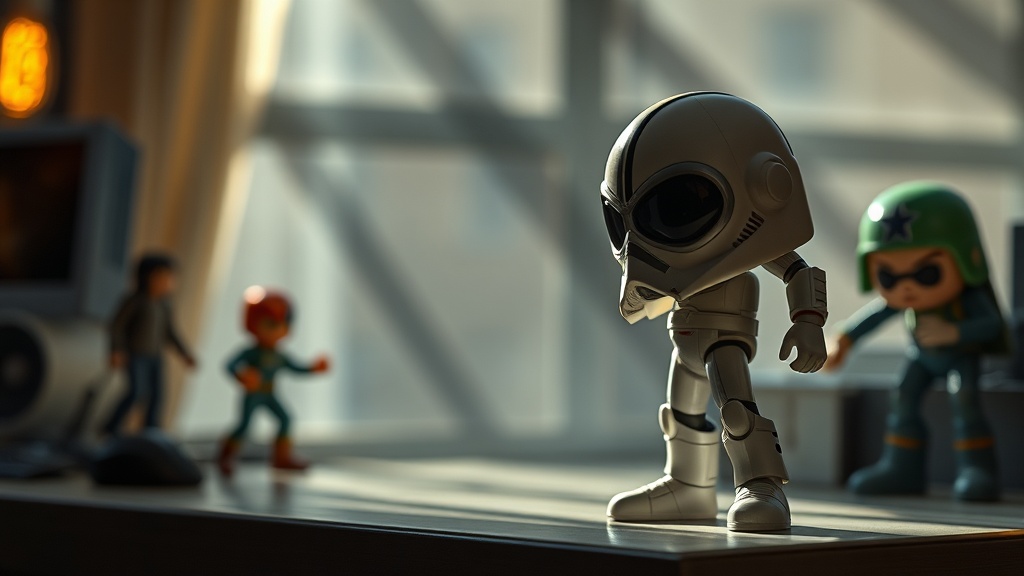
Protecting Your Vinyl Figures from Sunlight Damage

Imagine walking into your display room to find your mint-condition Disney Store limited edition figure or a highly sought-after Funko Pop looking slightly... off. The vibrant reds of a character's outfit have faded into a dull pink, or the crisp white of a Stormtrooper's armor has taken on a sickly yellow tint. This isn't a trick of the light; it's UV degradation. This post covers the specific ways sunlight and UV rays destroy vinyl collectibles and how you can prevent it.
Sunlight is the silent killer of any serious collection. Whether you collect high-end Medicom Be@rbricks, Disney Parks exclusive figures, or standard vinyl pops, the physics of light degradation remain the same. UV rays break down the chemical bonds in plastic and paint, leading to permanent discoloration and structural brittleness. If you don't take steps to control your environment, your investment value will plummet faster than a bad stock market day.
How Does Sunlight Damage Vinyl Figures?
Sunlight damages vinyl figures primarily through UV radiation and thermal heating, which causes both chemical fading and physical warping. UV rays strike the pigments in the paint, breaking down the molecular structure that gives the color its intensity. This process is often irreversible. Once the pigment is gone, no amount of cleaning will bring it back.
It's not just the color, though. Heat is a massive factor. If your display shelf is sitting in a sunbeam, the ambient temperature around the figure can rise significantly higher than the room temperature. This can lead to "leaning" figures—where the vinyl becomes soft enough to succumb to gravity—or even the melting of certain types of soft-touch coatings. I've seen more than one high-end figure lose its shape because it sat too close to a window during a July afternoon.
The science behind this is well-documented. According to the Wikipedia entry on ultraviolet radiation, UV rays have enough energy to break chemical bonds. In the world of collectibles, this means the polymer chains in your vinyl figures are literally being dismantled by the sun. It's a slow, invisible process that happens every time the sun hits your shelf.
Common symptoms of UV damage include:
- Pigment Fading: Colors becoming lighter or shifting (e.g., red turning pink).
- Yellowing: White plastics turning yellow or even brown over time.
- Surface Chalking: The texture of the vinyl becomes powdery or dull.
- Structural Warping: The figure loses its ability to stand straight due to heat-induced softening.
What Is the Best Way to Protect My Collection?
The best way to protect your collection is to use a combination of UV-filtering glass, blackout curtains, and controlled indoor lighting. You can't stop light from existing, but you can control how much of it reaches your most valuable pieces. A layered approach works best—don't just rely on one single method.
First, look at your display cases. If you use acrylic cases or glass cabinets, check if they have UV protection. While many standard acrylic cases offer some level of protection, they aren't a magic shield. If you're investing in high-end displays, look for those specifically marketed with UV-resistant properties.
Second, manage your room's light sources. If your office or hobby room has large windows, those are your primary enemies. You don't have to live in a cave, but a simple set of blackout curtains or UV-blocking window film can make a massive difference. This film is a great way to keep the light in the room without sacrificing the view. It's a one-time installation that saves a lot of headaches later.
Third, consider your lighting. If you use LED strips to light up your shelves, make sure they are true LEDs. Older incandescent bulbs or certain halogen lights emit heat and UV radiation that can be just as damaging as the sun. LEDs are generally much safer for collectors because they emit very little heat and minimal UV rays.
Here is a quick breakdown of common display setups and their protection levels:
| Display Type | UV Protection Level | Heat Risk | Best For |
|---|---|---|---|
| Open Shelving | Very Low | High | Budget collections |
| Standard Glass Cabinet | Low to Moderate | Moderate | General display |
| UV-Resistant Acrylic Case | High | Low | High-value/Limited editions |
| Museum-Grade Vitrine | Maximum | Minimal | Investment-grade pieces |
I've personally moved my most expensive Disney Parks exclusives into dedicated acrylic cases with UV filters. It's an extra expense, but it provides peace of mind. It's better to spend the money now than to realize your "Mint in Box" figure is actually "Sun-faded in Box" when you go to sell it.
Can I Use UV Sprays on My Figures?
No, you should not use any sprays or chemical coatings on your vinyl figures to prevent UV damage. Most "protective" sprays found online are not designed for the specific chemistry of vinyl and can actually cause the surface to become tacky, cloudy, or even melt the paint. You'll likely do more harm than good by trying to "treat" the figure itself.
Instead of treating the figure, treat the environment. This is a common mistake I see new collectors make. They think there's a "magic spray" that will preserve the paint. There isn't. The safest way to handle a figure is to leave it exactly as the manufacturer intended and focus on the light and heat around it.
If you're worried about a specific piece, the most effective "treatment" is simply distance. Keep your shelves away from windows and avoid placing displays directly under HVAC vents that might blast hot air onto the plastic. A stable temperature is your best friend. If you want to get technical, you can use a digital hygrometer to monitor both temperature and humidity in your display area.
It's worth noting that even "protected" environments can fail if you aren't consistent. If you leave a window open on a hot day, that sunlight will still find its way to your shelf. Consistency is the key to long-term preservation.
If you're looking for more information on how light affects materials, the National Park Service provides excellent resources on how light affects various surfaces and how to mitigate damage in museum settings. While they focus on historical artifacts, the principles of light management are identical for your vinyl collection.
A common question I get is whether the packaging (the box) helps. The answer is a resounding yes. The cardboard box acts as a physical barrier against light. This is why "New In Box" (NIB) items often hold their value better—the box provides a layer of opacity that protects the figure inside. However, don't rely on the box as a permanent solution if the box itself is sitting in direct sunlight, as the box will degrade and eventually fail to protect the figure.
Remember, your collection is a reflection of your passion. Taking these steps might feel like a lot of work, but it's the difference between a collection that looks great for twenty years and one that looks tired after two. Keep your light low, your temperature stable, and your figures out of the sun. Your future self (and your wallet) will thank you.
Steps
- 1
Assess Light Exposure
- 2
Install UV Window Films
- 3
Use Acrylic Display Cases
- 4
Rotate Your Collection