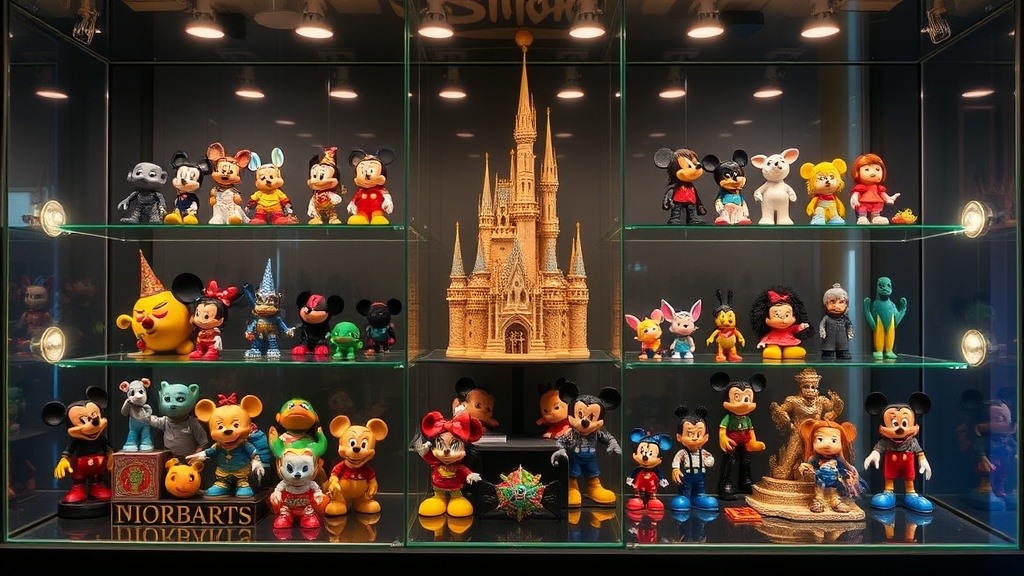
Setting Up a Museum Grade Display for Disney Vinyl and Designer Toys

The Problem with Standard Shelving
You finally tracked down that limited edition designer vinyl figure—the one with the intricate paint job and the textured finish. You place it on a standard wooden bookshelf in your living room, feeling a sense of accomplishment. Three months later, you notice a thin layer of gray dust settling into the crevices of the sculpt. Perhaps even worse, the sunlight hitting that corner of the room has started to dull the vibrant pigments of the vinyl. This isn't just a matter of aesthetics; it's a matter of preservation. Standard home furniture wasn't built to protect high-value pop culture collectibles from the slow decay caused by environmental factors.
Displaying a collection requires more than just a flat surface. You have to think about light, airflow, and physical stability. If you treat your Disney designer toys like standard toys, you'll likely see their value drop the moment they leave the box. This guide covers how to build a display environment that keeps your pieces looking as fresh as the day you unboxed them.
What Type of Lighting Should I Use for Vinyl Figures?
Light is the silent killer of high-end collectibles. Most collectors don't realize that even indirect sunlight can cause UV degradation, leading to fading or even "melting" in certain types of soft vinyl. When you're setting up a display, you need to be intentional about your light sources.
- Avoid Direct Sunlight: Never place a display case directly across from a window. Even with UV-protected glass, the heat buildup can be disastrous.
- LED vs. Incandescent: Always opt for LED lights. Incandescent bulbs produce heat, which is the enemy of vinyl. LEDs run cool and don't emit the UV rays that traditional bulbs do.
- Diffusion is Key: If you're using an illuminated shelf, ensure the light is diffused. You don't want a harsh spotlight hitting one side of a figure while leaving the other in deep shadow; this creates uneven heat distribution.
For those serious about their setup, checking the technical specs of your light sources is a good move. The Department of Energy offers great breakdowns on how different light types affect environments, which is helpful when deciding on your display's electrical needs.
How Do I Prevent Dust Accumulation on Small Details?
Dust isn't just an eyesore; it's abrasive. When dust settles into the fine lines of a designer toy, and you try to wipe it away with a cloth, you're actually micro-scratching the surface. This ruins the finish over time. To prevent this, you need a sealed or semi-sealed environment.
Acrylic cases are the gold standard here. They provide a physical barrier that keeps the air relatively still. However, a common mistake is leaving a gap at the top or back of the case. If air can flow through, dust will find its way in. When selecting a case, look for those with tight-fitting lids or magnetic closures. If you're using a glass cabinet, ensure the doors have a rubber or silicone gasket to create a tighter seal.
If you already have dust on a piece, don't reach for a paper towel. Use a high-quality, soft-bristled brush—the kind used for makeup or fine art—to gently whisk the particles away. This minimizes the risk of scratching the paint. For more information on the chemistry of why certain materials react to dust and moisture, the ScienceDirect database often hosts studies on polymer degradation that are eye-opening for serious collectors.
Can I Use Humidity Control Inside My Display Case?
While humidity is a bigger concern for paper-based collectibles (like vintage Disney posters or comic books), it still matters for vinyl and high-end designer toys. High humidity can lead to a "sticky" feeling on the surface of certain plastics, a phenomenon often called "vinyl rot" or "sticky figure syndrome." This happens when the plasticizers in the material begin to migrate to the surface.
To combat this, you can include small, inconspicuous silica gel packets inside your display cases. These act as desiccant packs, absorbing excess moisture from the air. Just be careful—don't let the packets touch the figure directly, as they can leave a residue. You might want to hide them in a small-scaleed "accessory" or a fake piece of scenery within your display to keep the aesthetic clean.
| Environmental Factor | Risk to Vinyl | Prevention Method |
|---|---|---|
| UV Light | Color Fading | UV-protected acrylic/LEDs |
| High Heat | Deformation | Ventilated, cool-running electronics |
| Humidity | Sticky Surface | Silica gel packets |
| Dust | Micro-scratches | Sealed display cases |
Building a display is an iterative process. You might set up a beautiful glass cabinet, only to realize a week later that the heat from your room's radiator is making the interior too warm. Keep an eye on your pieces. If you notice a change in texture or sheen, adjust your setup immediately. A professional-grade display is about constant observation and small, incremental adjustments to maintain the perfect environment.