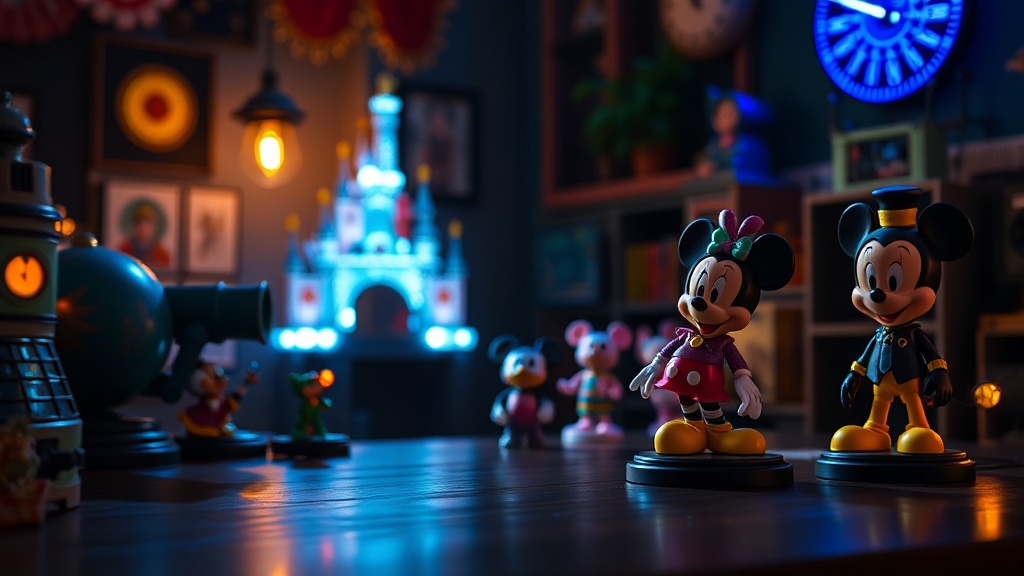
Why High-End Lighting Changes Everything for Disney Vinyl Collections

The average collector loses up to 15% of their collection's visual appeal within just three years due to improper light exposure. This isn't just about a little fading; it's about the chemical breakdown of pigments in vinyl and the slow degradation of the plasticizers that keep your figures from becoming brittle. When you display a limited edition Disney designer toy, you aren't just showing it off—you're putting it on display for a slow-motion battle against UV rays and heat. Understanding how light interacts with different materials is the difference between a vibrant shelf and a graveyard of dull, cracked figurines.
Is UV Light Actually Dangerous for Vinyl Toys?
Yes, it absolutely is. Most high-end designer vinyl, including much of the popular Disney x Funko or designer collaborations, relies on specific pigment densities to achieve that signature pop. UV light—the stuff from the sun and even certain high-intensity indoor bulbs—breaks down the chemical bonds in these pigments. This process, often called photodegradation, turns bright yellows into a sickly pale cream and deep blues into a dusty grey. It's not just a surface issue; the light can actually reach into the material, affecting the structural integrity over decades.
Collectors often assume that if a toy is in a glass case, it's safe. That's a dangerous assumption. Standard glass provides almost zero protection against the UV spectrum. You might see a figure looking perfect for a year, but once the light starts eating away at the surface finish, the damage is permanent. You can't just "buff it out" if the color itself has changed. This is why professional galleries use specific light-filtering techniques, and why your home display needs more than just a standard desk lamp.
How Do I Choose the Right Lights for My Display?
When you're picking out lighting for your Disney collection, you need to look at two main factors: the light source type and the color temperature. LED technology has changed the game for us collectors. Unlike old incandescent bulbs that put out massive amounts of heat and a significant amount of UV radiation, LEDs are much cooler and easier to control. However, not all LEDs are created equal. Some cheap, high-intensity LEDs can still generate enough heat to soften the vinyl of smaller, more delicate pieces.
- Avoid Incandescent Bulbs: They are heat engines that happen to produce light. That heat is a silent killer for vinyl.
- Use UV-Filtered LEDs: Look for bulbs specifically marketed as having low UV output.
- Monitor Color Temperature: A warmer light (around 2700K-3000K) feels cozy, but a cooler light (5000K+) can make the colors pop more—though it also carries a higher risk of faster fading if the intensity is too high.
A good rule of thumb is to keep your light sources indirect. Instead of pointing a bright spotlight directly at a character's face, bounce the light off a nearby wall or use diffused lighting. This softens the shadows and provides a more even glow without the harsh, concentrated energy that causes localized damage. If you're using light strips inside a shelf, make sure they are tucked away so the light hits the figure from an angle rather than a direct, high-energy strike.
Can I Use Sunlight to Light My Display?
The short answer is: please don't. While natural light is beautiful, it is the single most aggressive enemy of a collector. A single afternoon of direct sunlight hitting a shelf can do more damage than a year of indirect light. If your display-case area is near a window, you must treat it as a high-risk zone. Even with heavy curtains, the ambient UV levels in a sun-drenched room can eventually dull the luster of your most prized Disney pieces.
If you want that natural look, consider using a UV-filtering film on your windows. This is a transparent layer that blocks the harmful rays while still letting the light in. It's a small investment that saves your collection from a slow, colorless death. If you're serious about your setup, check out the Department of Energy's guidelines on lighting to understand how different light-emitting technologies function at a fundamental level. It'll help you understand why your choice of bulb matters so much.
It is also worth looking at the material science behind your toys. For a deep dive into how different plastics react to environmental stressors, the American Chemical Society offers resources that explain the molecular breakdown of polymers. Understanding this can help you realize that your display isn't just a shelf—it's a controlled environment that requires constant vigilance.
When building a display, think about the "distance-to-heat" ratio. If you're using a light that sits very close to the figure, ensure there is enough airflow to prevent heat pockets. A little bit of heat can make the vinyl slightly more pliable, which might sound okay, but over time, this leads to "leaning" figures where the weight of the head causes the neck to sag. It's a common heartbreak in the designer toy community. Always prioritize stability and light-quality over sheer brightness.
Quick Checklist for Display Lighting
Before you plug in that new display case, run through this quick list to ensure you aren't accidentally sabotaging your collection:
| Factor | What to Look For | What to Avoid |
|---|---|---|
| Light Type | LED (Cool/Low UV) | Incandescent or Halogen |
| Placement | Indirect/Diffused | Direct/High Intensity |
| Environment | Climate-controlled | Direct Sunlight/High Humidity |
| Color Tone | Neutral/Warm (2700K-4000K) | Extreme High-Blue/UV-heavy |
Your collection represents more than just plastic and paint; it's a curated piece of your personal history. Treating it with the respect a museum would treat its archives will ensure those colors stay as vibrant as the day you unboxed them.