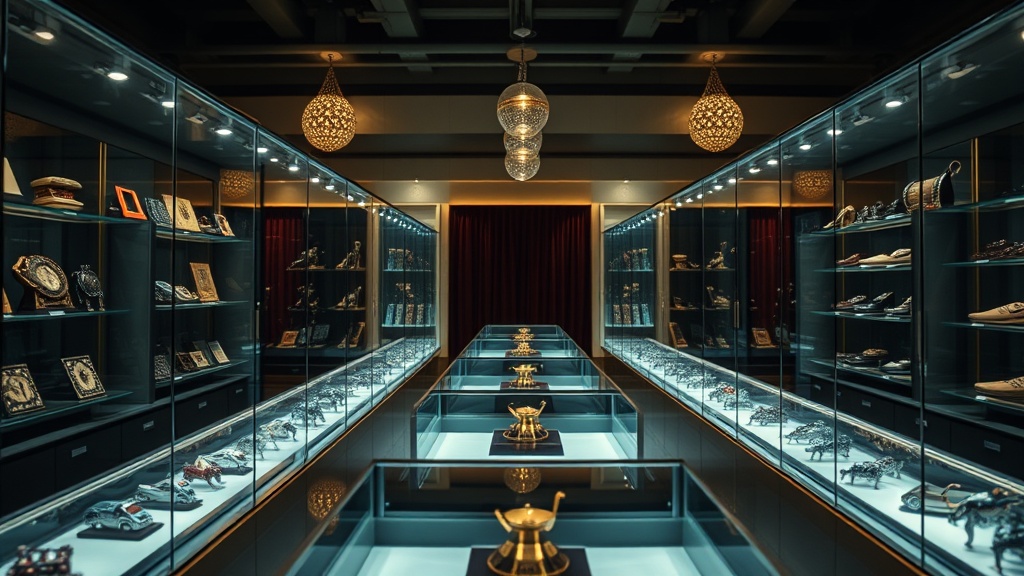
Selecting High-End Display Cases for Premium Collections

Have you ever looked at a high-value piece in your collection and realized it's actually at risk from the very environment you've built for it? When you invest in high-end Disney porcelain, limited edition Star Wars prop replicas, or rare Funko Pops, the display case isn't just a shelf—it's a piece of preservation equipment. This guide breaks down the technical requirements for high-end display cases, focusing on material quality, light management, and environmental stability to ensure your most expensive assets remain in mint condition.
What Material Should I Use for Display Cases?
Acrylic and tempered glass are the two primary materials used for premium display cases, each offering different benefits for specific types of collectibles. If you're displaying lightweight items like vinyl figures or Funko Pops, high-grade acrylic is often the go-to choice because it's lightweight and shatter-resistant. However, if you're displaying heavy bronze statues or large-scale Disney legacy pieces, you really need tempered glass for structural integrity.
Acrylic is great because it's clear, but it has a tendency to scratch easily if you aren't careful. It also can undergo "yellowing" over time if the plastic isn't high-quality UV-stabilized acrylic. Glass is much more durable and stays clear for decades, but it's heavy and can be dangerous if it breaks.
Here’s a quick breakdown of how these materials stack up against common collectible needs:
| Feature | Acrylic (Polymethyl Methacrylate) | Tempered Glass |
|---|---|---|
| Weight | Lightweight and easy to move. | Heavy and requires sturdy shelving. |
| Durability | Impact resistant (won't shatter). | High impact resistance, but can break. |
| Clarity | Excellent, but can scratch. | Highest clarity; very scratch-resistant. |
| Best For | Pop culture figures and lightweight props. | Heavy statues and high-end porcelain. |
One thing to watch out for is the "off-gassing" from cheap plastics. Some lower-end acrylic cases can release gases that actually degrade the paint on your figures over time. This is why I always suggest checking the technical specifications for polymethyl methacrylate when buying expensive enclosures.
How Do I Protect My Collection from Light Damage?
The most effective way to protect your collection from light damage is to use UV-filtering glass or acrylic and keep your displays away from direct sunlight. Light is the silent killer of collections. It causes "photodegradation," which is a fancy way of saying your vibrant Disney character paint jobs will fade and your vinyl figures will become brittle and discolored.
If you have a collection that includes sensitive items, you'll want to look for cases that offer UV protection. Many collectors use specialized lighting setups, but you have to be careful. LED lights are much better than traditional incandescent bulbs because they produce significantly less heat and almost no UV radiation.
I've seen too many people ruin a perfectly good collection by placing a display case right next to a sunny window. Even if the glass is clear, the UV rays will eat away at the pigments in your items. If you can't move the case, consider adding a UV-protective film to your window or using a case with built-in UV-filtering properties. It's a small step that makes a huge difference in long-term value. You might also want to read about protecting your vinyl figures from sunlight damage to understand the science behind it.
When choosing lighting for your case, follow these rules:
- Use LEDs only: They run cool and don't emit much UV.
- Avoid heat: Never use halogen or incandescent bulbs near your items.
- Timed Lighting: Set your display lights on a timer so they aren't running 24/7.
- Check the Color Temp: A warmer light looks nice, but a cooler light can sometimes highlight certain details better.
How Much Should I Spend on a Display Case?
The cost of a high-end display case depends entirely on whether you are buying a mass-produced retail unit or a custom-built museum-grade enclosure. For standard hobbyists, a high-quality acrylic case from a brand like IKEA or a specialized toy display company might run you between $50 and $200. However, for serious collectors with high-value assets, professional-grade glass cases can easily exceed $1,000.
Don't assume a more expensive case is always better. Sometimes, a $500 case with poor ventilation is worse than a $100 case with great airflow. You're paying for the material, the lighting system, and the security features. If you're housing something worth thousands of dollars, you shouldn't be using a flimsy plastic box from a big-box store.
Consider these three tiers of spending:
- The Entry Level ($30 - $100): Standard acrylic or glass boxes. Great for single figures or small groups. They provide basic dust protection but offer very little in the way of environmental control.
- The Mid-Tier ($150 - $500): Modular shelving systems with integrated LED lighting. These are perfect for larger collections like a full set of Disney pins or a series of Star Wars busts. They offer better aesthetics and more stability.
- The Professional Tier ($1,000+): Custom-built, museum-grade enclosures. These often feature climate control, advanced UV filtration, and high-security locking mechanisms. This is where you're investing in long-term preservation.
It's worth noting that a high-end case is an investment in the resale value of your items. If you ever decide to sell a piece, being able to show it was kept in a controlled, UV-protected environment is a massive selling point. If you're just starting out, focus on the basics. You don't need a $2,000 cabinet to protect a $20 figure, but you definitely need a plan for your most valuable pieces. This ties back to how to start a Disney collectibles collection that actually gains value—part of that value is the care you take from day one.
One thing I've learned over the years is that dust is your second biggest enemy. Even the best cases can have tiny gaps. If you're using modular cases, make sure the seams are tight. A little bit of compressed air goes a long way in keeping things looking pristine without scratching the surfaces.
If you're displaying something truly delicate, like a vintage-era Disney porcelain piece, you might even want to look into airtight-seal cases. These prevent any moisture or humidity from getting inside, which is a common issue in certain climates. It's a bit overkill for most, but for the high-end collector, it's just good practice.